
Review - Inside Out 2 (50th Post!)
Reviewing a blockbuster hit sequel, and thanking anyone who has taken the time to read this newsletter in the past year.

It’s been almost a year since I first decided to write about films and publish them on a weekly basis. The result is a deeper love for the art of filmmaking and an even deeper appreciation of anyone who writes good film criticism for a living. In an age where people just look to Rotten Tomatoes and Metacritic scores which aggregate subjective opinions, my invitation would be for you to find people who are good at what they do, look for those writers you identify with (and even those who don’t) and curate your diet of films through recommendations.
As someone who used to look at these aggregate scores only, I would’ve never found many films I adore today, nor would I have deepened my knowledge as I do each week when I parse through the writings of many critics I admire like the entire Reverse Shot and Film Comment teams and so many others. If you identify with my writing, good! I’ll be sure to keep doing it as long as I can. In any case, my message would be to read more than parse through, and focus on opinions rather than aggregate scores.
With that out of the way, here is my review for 2024’s biggest film so far:
Filled to the Brim with Emotion: Kelsey Mann’s Inside Out 2
Production from the United States. Released in 2024.
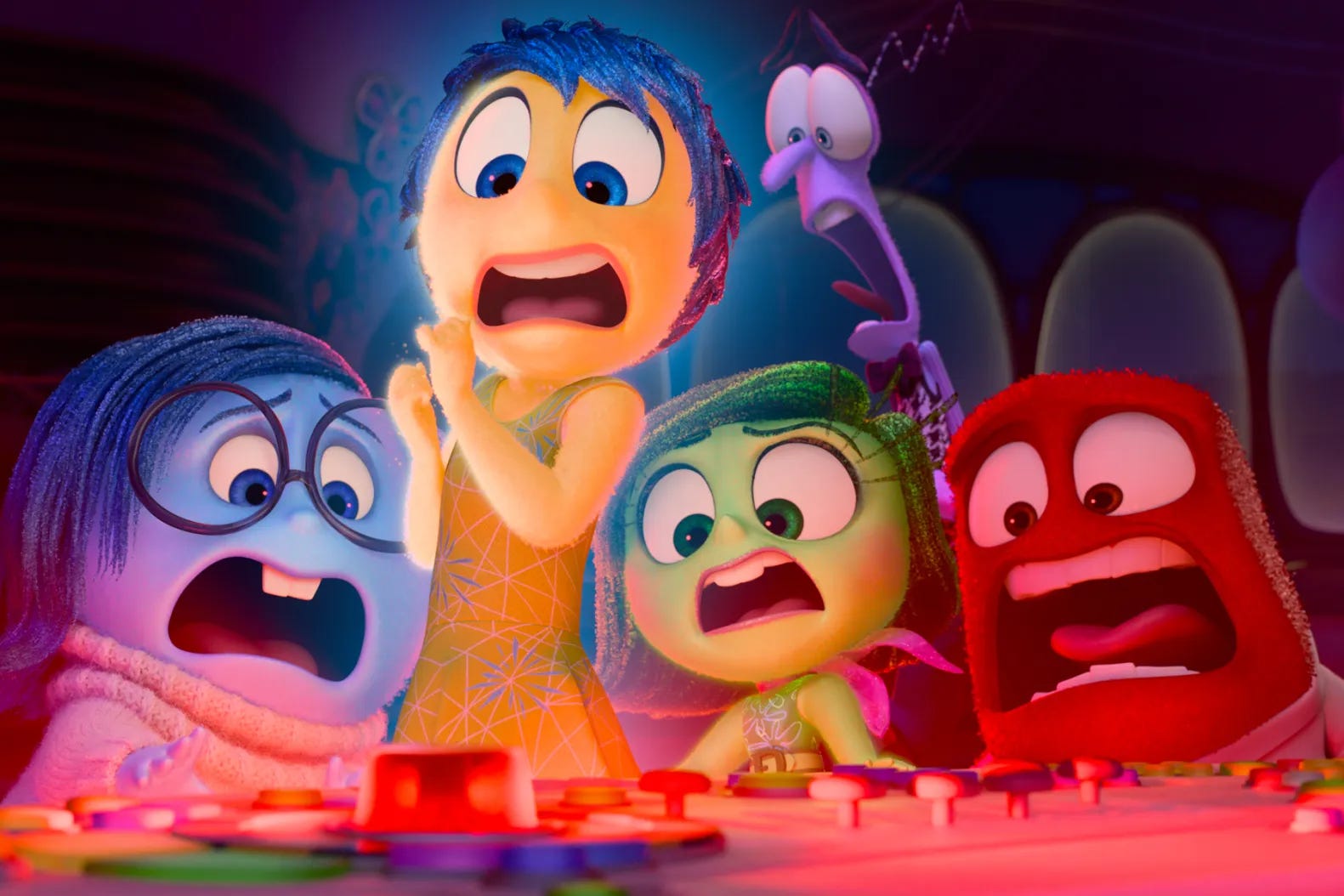
Despite the colors, the intricate and creative designs, the world-building, the ingenious concept and all other elements of the original Inside Out film, it was essentially a two-hander between Joy and Sadness, where both learned to recognize the importance of the latter in people’s well-being. Riley was just a little girl, so she didn’t need that much characterization, and Fear, Anger and Disgust exacerbate Riley’s uncomfortable situation once Joy and Sadness were out of the picture, and the rest worked on its own. Its deceptive simplicity was its greatest strength, culminating in the one-two punch of the Bing-Bong scene and Sadness finally taking control, both managed through cathartic realizations by Joy (I cried again while rewatching these scenes as I wrote this review).
Essentially, Riley learned to live with Sadness as a tool to let go and call for help. Its theme was never too on the nose, and felt completely earned. Nine years later, Pixar brought viewers back to the colorful world of Riley’s mind just as she turns to her teenage years, to tell another story with the same intent of reaching an emotional truth, this time about being controlled by emotions while in puberty. The thing is, while it is still short and sweet and emotional all around, it is significantly more bloated, has a ton more characters, worlds and ideas to flesh out, including Riley who has her own things going on. The result is still a good film, but not nearly the achievement that the first Inside Out was.
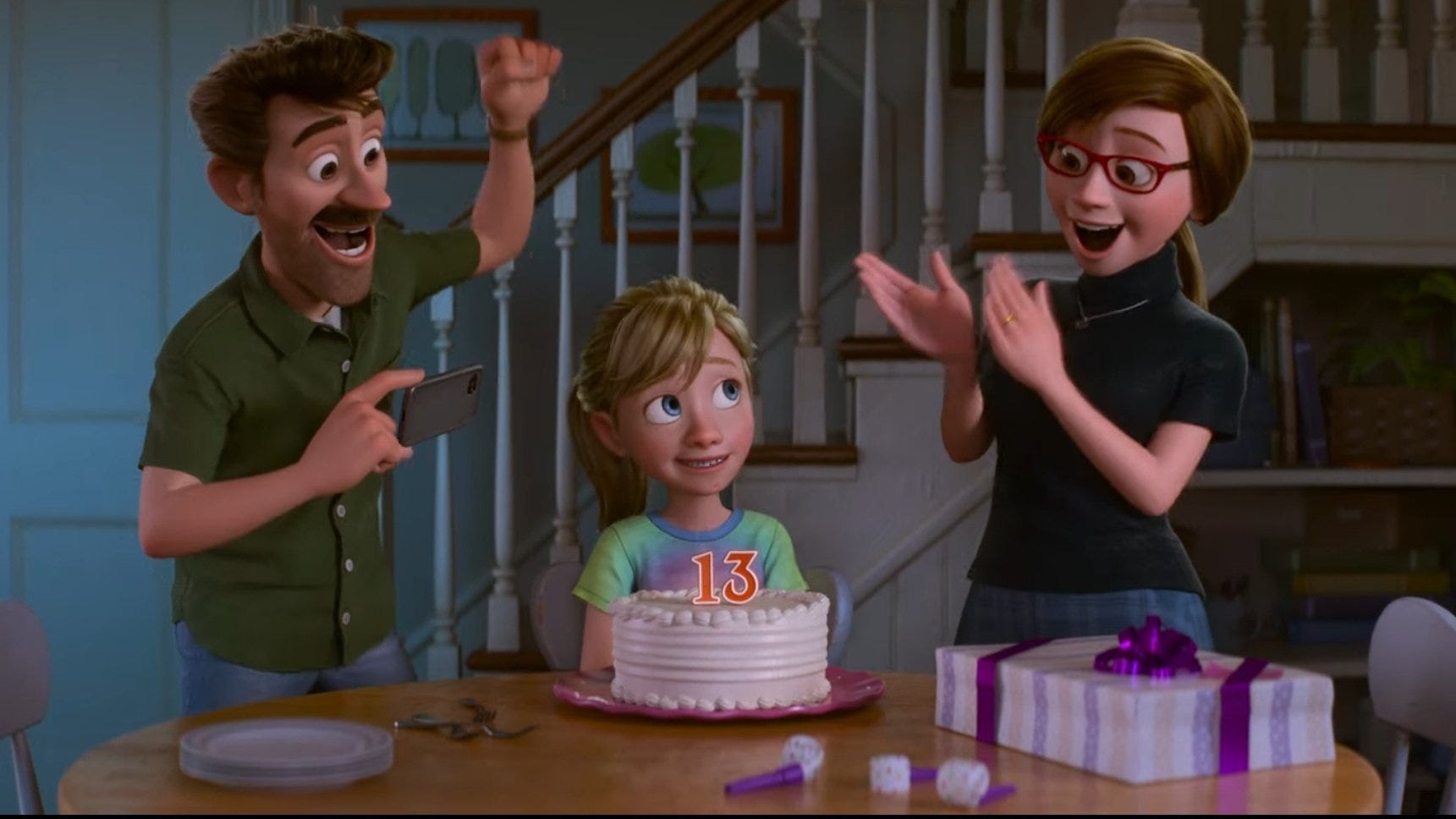
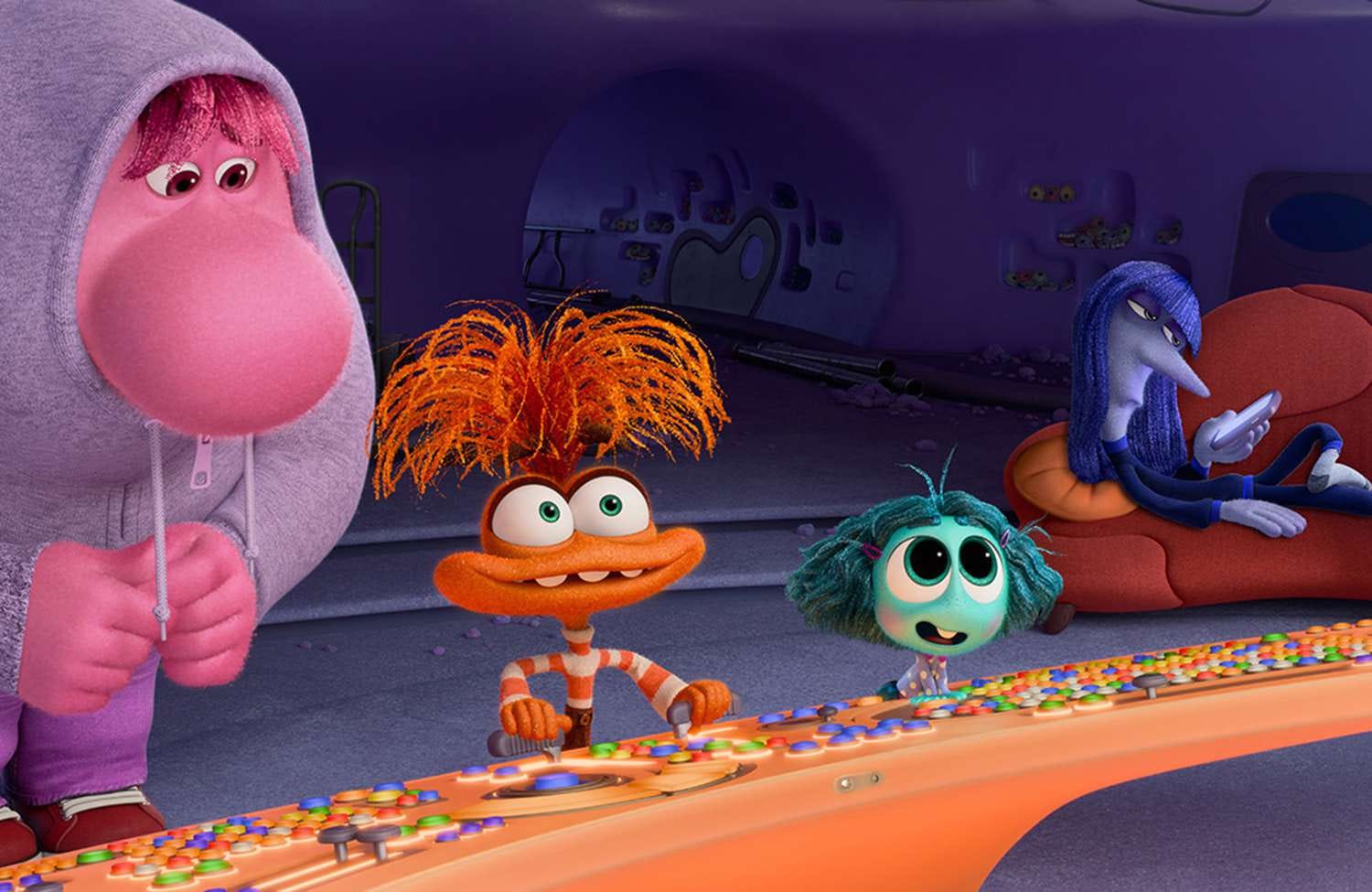
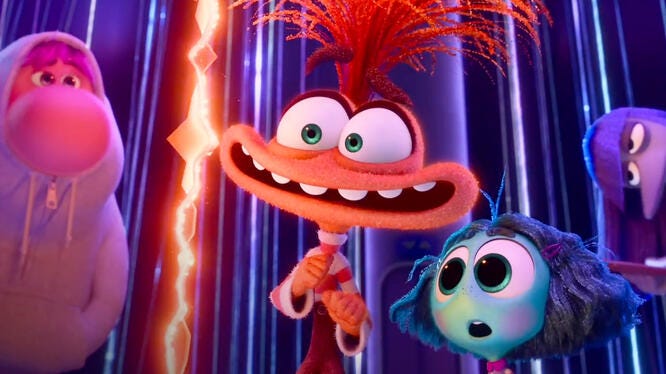
This second film follows Riley as she is just going through puberty, while she attends a hockey summer camp. Her emotions have curated important memories for her to retain and form her sense of self, where she perceives herself as a good person. Trouble strikes, however, when four new emotions arrive: Anxiety, Envy, Embarrassment and Ennui. This new set of emotions want what is best for Riley, but their perception of what is good is far different from what Joy and the others have planned for her. Joy sees her keeping to her core beliefs, while Anxiety wants to change Riley so that she can have a better future. Of course, this clash results in Anxiety repressing the other emotions, and so the journey begins for Joy, Sadness, Anger, Fear and Disgust to retrieve Riley’s sense of self and regain control over headquarters.
First with the good things: the other emotions, particularly Anxiety and Disgust, have a lot of time to shine and grow. The entire story leads viewers to believe that Anxiety is a well-intentioned bad guy, but as the story progresses, it becomes clear that Joy and Anxiety are equals in how they try to control and curate Riley’s personality, not letting show herself entirely, both by suppressing memories and other emotions. It’s smart writing by Pixar’s team, but not nearly as emotionally resonant as the first film.
Another good thing is how fleshed-out Riley is as a character. As opposed to the first film, she is not an extension of her emotions but rather her own person. She spirals, changes herself, lets down her friends and tries to suppress parts of herself that seem uncool, all to fit in with other people who she thinks will benefit her future. Her efforts to pressure and change herself result in an all too realistic breakdown that makes a similar scene in Puss in Boots: The Last Wish seem tame or unnecessary.
And a brief parenthesis with this point, the therapy-zation of culture resulted in a lot of projects like this Puss in Boots film using single moments of psychological distress or coming to terms with certain feelings to feel more elevated, where for me they feel rather exploitative and lazy (I didn’t like the Puss in Boots film as much as everyone else did). Yet here, despite my reservations, it feels more justified because the film is constructed around psychology and emotions, so it feels like a natural end point and not a gimmick.
Now with the not so good. For its short runtime, it manages to make justice to every character, setting and idea. But that comes at the cost of the film feeling extremely fast paced and not letting certain moments of slowing down like they should. In the span of ten minutes, Riley has her first hit of puberty, acts out against her mom, realizes her friends are not going to the same school she is, they hug, she ditches them, is called out by the coach and starts acting out while Anxiety suppresses the other emotions and removes her sense of self. It’s too much, and its fast pace makes certain moments feel less earned. It also makes certain other side characters feel underused or unjustified, like Pouchy or the Final Fantasy-like character, or the anxiety control room. Problems are moved through or resolved so quickly that again, the resolution doesn’t feel as earned as it should. Of course, it does have that banger of an ending, but the buildup lacks its energy or sense of pace.
That fast pace also results in certain moments becoming gags that I’m sure the writers wanted to explore further, but never did, like Riley’s overreactions, which are immediately abandoned as the film focuses on its next part, Sadness’ whole plot work which lacks and arc and leads to unjustified actions just to keep the story going, Riley’s turmoil resulting in playing less than ideal hockey and her coach’s perception of her. All of these moments are either briefly explored and abandoned, or are incoherent with the rest of the story, or both. As a result of all these problems, I did not cry once, despite expecting to (while I cried only by rewatching a single scene from the first film).
Ultimately, Inside Out 2 is another well-intentioned project by Pixar which successfully used personified concepts to explain or characterize complex situations in a form understood by children and appreciated by adults. It lacks the nuances and the slower pace that made the first film shine bright, resulting in less of an emotional resonance. Yet, it still is a worthy entrant into Pixar’s oeuvre: fun, breezy, dense and thought-through. My hope is that Pixar takes this opportunity to find and tell stories that don’t feel overly complicated and conceptual, like Soul or Elemental, but rather tell the stories that mine for truth with emotion, as they did before with The Incredibles, Ratatouille, the Toy Story films (all of them), Inside Out, and more recently, with Luca and Turning Red (I cried with this last two films, always a good sign).
Congrats on the 50th edition ! Keep it up